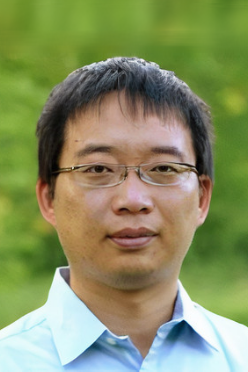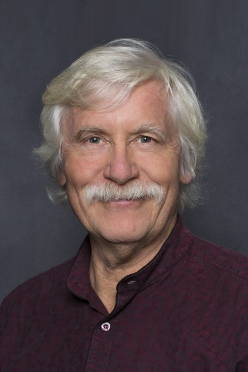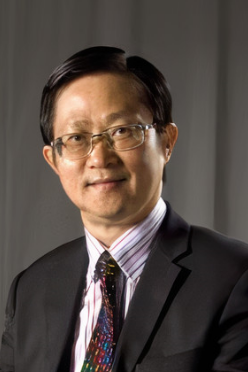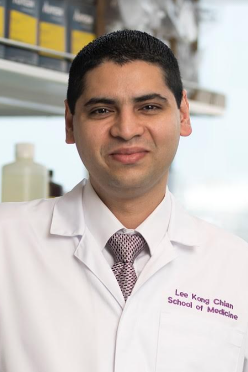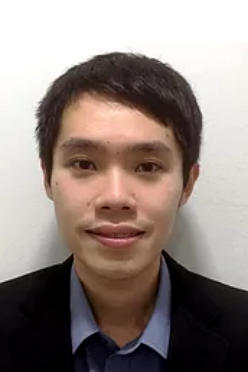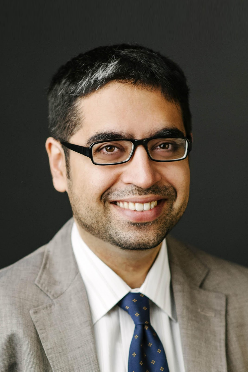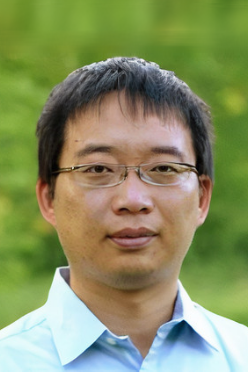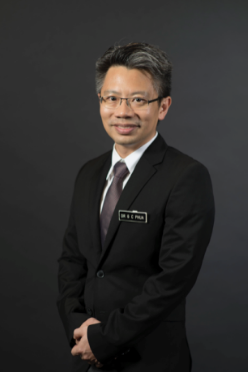
Throughout the years, ISYF has invited eminent scientists and Nobel Laureates to share their insights with our international delegates as part of our ‘Dialogues and Masterclasses’ series. Given the Covid-19 pandemic this year, our dialogue sessions are going virtual! ISYFdigital 2021 is proud to introduce the brand new ‘Meet-the-Scientist’ Sessions, an exciting online platform from which participants can glean valuable lessons via discussions with renowned scientists and a Nobel Laureate. An edifying learning journey awaits us as we explore how Science can help us to navigate the uncharted waters ahead! Are you ready?
Click on each speaker to find out more
Hover for brief credentials
Throughout the years, ISYF has invited eminent scientists and Nobel Laureates to speak to our delegates from all over the world as part of our Dialogues and Masterclasses series. This year, during the Covid-19 pandemic, our dialogue sessions are going virtual! ISYF Digital is proud to introduce the brand new ‘Meet-the-Scientist’ Sessions. Participants will be able to listen to eminent scientists and a Nobel Laureate, from behind their screens, all across the world. Look forward to an exciting Journey of Science as we learn about how Science can help us to navigate the uncharted waters ahead! Are you ready?
Tap on each speaker to find out more
Long press for brief credentials
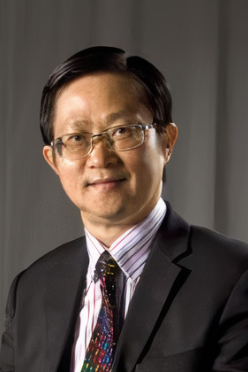
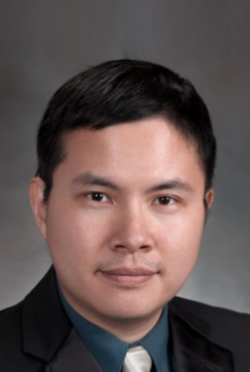
Prof. Lim Tit Meng is currently the Chief Executive Officer of the Science Centre Board as well as the Associate Professor of the Department of Biological Sciences at the National University of Singapore (NUS). Prior to these appointments, he was a Senior Lecturer at the Department of Zoology and a Director of the Bioscience Centre in NUS. He was awarded the UK Overseas Research Scholarship and graduated from the University of Cambridge in 1987 with a PhD in Developmental Biology and Embryology. He is also a skilled educator and mentor, having taught and supervised undergraduates, graduate students and post-doctoral fellows.He has received many teaching awards including the NUS Top 100 Excellent Teachers and the Faculty of Science Teaching Excellence Awards.
Research also lies close to Prof. Lim Tit Meng’s heart. His primary research interests lie in the field of cellular biology and nanotechnology. He has 296 publications to date and is a reviewer of 10 regional and international journals. He has served as Principal Investigator and co-Principal Investigator for a multitude of research projects. His research on the aging of the human brain helped to understand and devise strategies to reverse neurodegeneration such as Alzheimer’s and Parkinson’s diseases. His team also developed a polymer-based gene delivery system that condenses DNA into nanoparticles so as to develop a controllable in vivo neurotrophic and anti-apoptotic gene transfer technology as a novel therapeutic approach to treat aging-related neuronal loss and memory deficit.
Since he took on the role of CEO of Science Centre in 2010, Prof. Lim Tit Meng has made the Science Centre relevant to people from all walks of life by engaging them in meaningful ways. His vision is to create a Smart Science Centre which embraces technology and has something to offer to everyone from preschoolers, to working professionals, and to the elderly. Prof. Lim Tit Meng encourages local youth to challenge conventions and create possibilities to innovate, and hopes to inspire more youths to see STEM as a viable career path.
Prof. Lim Tit Meng is currently the Chief Executive Officer of the Science Centre Board as well as the Associate Professor of the Department of Biological Sciences at the National University of Singapore (NUS). Prior to these appointments, he was a Senior Lecturer at the Department of Zoology and a Director of the Bioscience Centre in NUS. He was awarded the UK Overseas Research Scholarship and graduated from the University of Cambridge in 1987 with a PhD in Developmental Biology and Embryology. He is also a skilled educator and mentor, having taught and supervised undergraduates, graduate students and post-doctoral fellows.He has received many teaching awards including the NUS Top 100 Excellent Teachers and the Faculty of Science Teaching Excellence Awards.
Research also lies close to Prof. Lim Tit Meng’s heart. His primary research interests lie in the field of cellular biology and nanotechnology. He has 296 publications to date and is a reviewer of 10 regional and international journals. He has served as Principal Investigator and co-Principal Investigator for a multitude of research projects. His research on the aging of the human brain helped to understand and devise strategies to reverse neurodegeneration such as Alzheimer’s and Parkinson’s diseases. His team also developed a polymer-based gene delivery system that condenses DNA into nanoparticles so as to develop a controllable in vivo neurotrophic and anti-apoptotic gene transfer technology as a novel therapeutic approach to treat aging-related neuronal loss and memory deficit.
Since he took on the role of CEO of Science Centre in 2010, Prof. Lim Tit Meng has made the Science Centre relevant to people from all walks of life by engaging them in meaningful ways. His vision is to create a Smart Science Centre which embraces technology and has something to offer to everyone from preschoolers, to working professionals, and to the elderly. Prof. Lim Tit Meng encourages local youth to challenge conventions and create possibilities to innovate, and hopes to inspire more youths to see STEM as a viable career path.
Sir Konstantin Novoselov is a British-Russian physicist who was born in Nizhny Tagil, Soviet Union in August 1974. He studied for his PhD under supervisor Andre Geim, first in the Netherlands, and then at the University of Manchester, UK. He is currently a Tan Chin Tuan Centennial Professor at the National University of Singapore (NUS) and specialises in the area of condensed matter physics, mesoscopic physics and nanotechnology. He is also part time Langworthy Professor of Physics and the Royal Society Research Professor at the University of Manchester.
He is best known for isolating graphene in 2004, and is an expert in condensed matter physics, mesoscopic physics and nanotechnology. He was awarded the Nobel Prize for Physics in 2010 for his achievements in successfully isolating graphene, and mapping its physical and chemical properties. Graphene, a previously theoretical material consisting of carbon atoms arranged in a hexagonal lattice and only one atom thick, now creates new possibilities within materials technology and electronics.
He has broad research interests from mesoscopic phenomena in ferromagnets to superconductors. He also has a vast background in nanofabrication and nanotechnology. Professor Novoselov also led the construction and establishment of the National Graphene Institute in Manchester, bringing together leading academics, scientists and business leaders to help develop the applications of tomorrow.
Professor Novoselov has published more than 330 peer-reviewed research papers and he is one of the most highly cited researchers in the world. He has been awarded numerous prizes, including the International Union of Pure and Applied Science Prize (2008), Carbon medal (2016) and Dalton medal (2016), among many others. His hobbies include traditional Chinese calligraphy and modern art.
Sir Konstantin Novoselov is a British-Russian physicist who was born in Nizhny Tagil, Soviet Union in August 1974. He studied for his PhD under supervisor Andre Geim, first in the Netherlands, and then at the University of Manchester, UK. He is currently a Tan Chin Tuan Centennial Professor at the National University of Singapore (NUS) and specialises in the area of condensed matter physics, mesoscopic physics and nanotechnology. He is also part time Langworthy Professor of Physics and the Royal Society Research Professor at the University of Manchester.
He is best known for isolating graphene in 2004, and is an expert in condensed matter physics, mesoscopic physics and nanotechnology. He was awarded the Nobel Prize for Physics in 2010 for his achievements in successfully isolating graphene, and mapping its physical and chemical properties. Graphene, a previously theoretical material consisting of carbon atoms arranged in a hexagonal lattice and only one atom thick, now creates new possibilities within materials technology and electronics.
He has broad research interests from mesoscopic phenomena in ferromagnets to superconductors. He also has a vast background in nanofabrication and nanotechnology. Professor Novoselov also led the construction and establishment of the National Graphene Institute in Manchester, bringing together leading academics, scientists and business leaders to help develop the applications of tomorrow.
Professor Novoselov has published more than 330 peer-reviewed research papers and he is one of the most highly cited researchers in the world. He has been awarded numerous prizes, including the International Union of Pure and Applied Science Prize (2008), Carbon medal (2016) and Dalton medal (2016), among many others. His hobbies include traditional Chinese calligraphy and modern art.
Dr. Clara Cheong is the Head of Administration and Scientific Affairs at Singapore Institute for Clinical Sciences (SICS), Agency for Science, Technology and Research (A*STAR). She completed her undergraduate years with a BA from Cornell University, and later graduated from the National University of Singapore (NUS) with a PhD in Developmental Biology. She also recently completed Executive Education at Stanford University.
Dr. Cheong first joined SICS as a research fellow in 2009 and through her work in genomic imprinting and identifying novel epigenetic biomarkers for metabolic health, she gradually ran a small laboratory team, as a research scientist. Instead of the lab, she now helms the administrative and scientific affairs departments at SICS, and oversees both operational aspects as well as institutional planning and evidence narratives.
She is excited by good scientific communication – sometimes an elusive goal, and relies on exciting studies such as that of Growing Up in Singapore Towards Healthy Outcomes (GUSTO) study, Singapore’s largest and most comprehensive birth cohort to date, to curate and showcase locally contextualized and globally relevant research, to others beyond the journals. Working with others who are the authentic deal, she looks forward to seeing the fruits of newer studies also take centre stage in driving a culture of evidence-driven health and wellness from the earliest ages.
In recognition of her status as an “inspiring, unconventional and fearless young achiever”, Dr. Cheong has also been featured in Prestige Magazine's 40 Under 40 list in 2020. In addition, she is featured in A*STAR’s “Women in Science” series, highlighting how her career in science as a woman breaks conventional gender inequalities. She hopes that young girls who aspire to be a leader in their fields do not conform to set notions of success and to hold fast to their values to drive their choices and motivations.
Dr. Clara Cheong is the Head of Administration and Scientific Affairs at Singapore Institute for Clinical Sciences (SICS), Agency for Science, Technology and Research (A*STAR). She completed her undergraduate years with a BA from Cornell University, and later graduated from the National University of Singapore (NUS) with a PhD in Developmental Biology. She also recently completed Executive Education at Stanford University.
Dr. Cheong first joined SICS as a research fellow in 2009 and through her work in genomic imprinting and identifying novel epigenetic biomarkers for metabolic health, she gradually ran a small laboratory team, as a research scientist. Instead of the lab, she now helms the administrative and scientific affairs departments at SICS, and oversees both operational aspects as well as institutional planning and evidence narratives.
She is excited by good scientific communication – sometimes an elusive goal, and relies on exciting studies such as that of Growing Up in Singapore Towards Healthy Outcomes (GUSTO) study, Singapore’s largest and most comprehensive birth cohort to date, to curate and showcase locally contextualized and globally relevant research, to others beyond the journals. Working with others who are the authentic deal, she looks forward to seeing the fruits of newer studies also take centre stage in driving a culture of evidence-driven health and wellness from the earliest ages.
In recognition of her status as an “inspiring, unconventional and fearless young achiever”, Dr. Cheong has also been featured in Prestige Magazine's 40 Under 40 list in 2020. In addition, she is featured in A*STAR’s “Women in Science” series, highlighting how her career in science as a woman breaks conventional gender inequalities. She hopes that young girls who aspire to be a leader in their fields do not conform to set notions of success and to hold fast to their values to drive their choices and motivations.
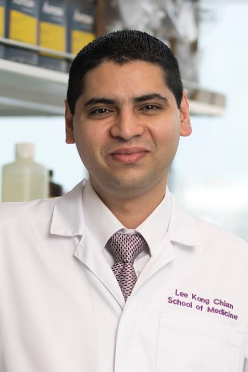
A globally-recognised clinician-scientist, Dr. Sanjay Haresh Chotirmall is an Assistant Professor and Provost’s Chair in Molecular Medicine at the Nanyang Technological University (NTU), Principal Investigator of the Translational Respiratory Research Laboratory in the Lee Kong Chian School of Medicine, and Honorary Senior Clinical Lecturer in Imperial College London. He graduated from the Royal College of Surgeons in Ireland with an honours degree and the college’s gold medal in Microbiology. In 2007, he was awarded a prestigious ‘Molecular Medicine Ireland Clinician Scientist Fellowship. During this fellowship, he completed a PhD investigating the role of estrogen in cystic fibrosis.
Having published numerous peer-reviewed papers and several book chapters to date, he is regularly invited as chair and speaker at regional, national and international meetings. He remains a member of the International Society of Human and Animal Mycology (ISHAM) working group for fungal infections, a steering committee member for the ATS-led international taskforce on COVID-19 management and participates in various other committees at the American Thoracic Society and European Respiratory Society.
Dr. Chotirmall’s Research Lab focuses on infection, inflammation, and immunity, in the context of chronic inflammatory respiratory diseases that affect Asian populations. Currently, his lab shares a core translational respiratory focus with a common goal to improve patient care through advancing the understanding of disease from a scientific basis. The group pursues research in a number of areas with significant clinical importance that impact Singaporeans and other Asian populations, such as chronic inflammatory lung disease, infectious respiratory disease and the pulmonary microbiome.
A globally-recognised clinician-scientist, Dr. Sanjay Haresh Chotirmall is an Assistant Professor and Provost’s Chair in Molecular Medicine at the Nanyang Technological University (NTU), Principal Investigator of the Translational Respiratory Research Laboratory in the Lee Kong Chian School of Medicine, and Honorary Senior Clinical Lecturer in Imperial College London. He graduated from the Royal College of Surgeons in Ireland with an honours degree and the college’s gold medal in Microbiology. In 2007, he was awarded a prestigious ‘Molecular Medicine Ireland Clinician Scientist Fellowship. During this fellowship, he completed a PhD investigating the role of estrogen in cystic fibrosis.
Having published numerous peer-reviewed papers and several book chapters to date, he is regularly invited as chair and speaker at regional, national and international meetings. He remains a member of the International Society of Human and Animal Mycology (ISHAM) working group for fungal infections, a steering committee member for the ATS-led international taskforce on COVID-19 management and participates in various other committees at the American Thoracic Society and European Respiratory Society.
Dr. Chotirmall’s Research Lab focuses on infection, inflammation, and immunity, in the context of chronic inflammatory respiratory diseases that affect Asian populations. Currently, his lab shares a core translational respiratory focus with a common goal to improve patient care through advancing the understanding of disease from a scientific basis. The group pursues research in a number of areas with significant clinical importance that impact Singaporeans and other Asian populations, such as chronic inflammatory lung disease, infectious respiratory disease and the pulmonary microbiome.
Dr. Ho Pin is a materials scientist working at the Agency for Science Technology and Research (A*STAR). She obtained her Ph.D. at the National University of Singapore (NUS) in Materials Science and Engineering in 2013, before becoming a Postdoctoral research fellow at the Massachusetts Institute of Technology in the same year. She is currently working as Scientist II in the Institute of Materials Research and Engineering (IMRE), Department of Electronic Materials.
Dr. Ho’s research interest is directed towards magnetic and ferroelectric materials and devices for memory and brain-inspired computing applications. She is currently the principal investigator of the project on Spin-Orbit Torque Writing for Skyrmionic Tunnel Junctions and the co-principal investigator of the Advanced Manufacturing and Engineering programmatic grants on both Spin Orbit Technologies and Ferroelectric AlScN. Skyrmions are novel swirling quasi-particles with a unique topology, and can have many applications in next-generation nanoelectronics, such as memory, logic and neuromorphic computing devices. These works investigate the stability, spin-orbit torque manipulation and electrical detection of these nanoscale topological spin structures for applications in nanotechnology-driven devices.
Dr. Ho has received many awards for her contributions to materials science. She is a recipient of the NUS Research Scholarship in 2009, NUS President Graduate Fellowship in 2012 and A*STAR International Fellowship in 2013.
With nanotechnology being a trending topic in materials science, Dr. Ho is at the forefront of delving deeper in these small particles which have big implications in the future of technology. She has authored more than 30 publications with over 580 citations with some in top scientific journals such as Nature Materials.
Dr. Ho Pin is a materials scientist working at the Agency for Science Technology and Research (A*STAR). She obtained her Ph.D. at the National University of Singapore (NUS) in Materials Science and Engineering in 2013, before becoming a Postdoctoral research fellow at the Massachusetts Institute of Technology in the same year. She is currently working as Scientist II in the Institute of Materials Research and Engineering (IMRE), Department of Electronic Materials.
Dr. Ho’s research interest is directed towards magnetic and ferroelectric materials and devices for memory and brain-inspired computing applications. She is currently the principal investigator of the project on Spin-Orbit Torque Writing for Skyrmionic Tunnel Junctions and the co-principal investigator of the Advanced Manufacturing and Engineering programmatic grants on both Spin Orbit Technologies and Ferroelectric AlScN. Skyrmions are novel swirling quasi-particles with a unique topology, and can have many applications in next-generation nanoelectronics, such as memory, logic and neuromorphic computing devices. These works investigate the stability, spin-orbit torque manipulation and electrical detection of these nanoscale topological spin structures for applications in nanotechnology-driven devices.
Dr. Ho has received many awards for her contributions to materials science. She is a recipient of the NUS Research Scholarship in 2009, NUS President Graduate Fellowship in 2012 and A*STAR International Fellowship in 2013.
With nanotechnology being a trending topic in materials science, Dr. Ho is at the forefront of delving deeper in these small particles which have big implications in the future of technology. She has authored more than 30 publications with over 580 citations with some in top scientific journals such as Nature Materials.
Assistant Professor Koh Ming Joo is the first President’s Assistant Professor who joined the Department of Chemistry at the National University of Singapore (NUS). He graduated from Nanyang Technological University (NTU) (Chemistry, First Class Hons) in 2012 before heading to Boston College for his PhD studies, under the supervision of eminent organometallic chemists Prof. Amir Hoveyda and Prof. Richard Schrock (Nobel Prize ‘05).
A recipient of several graduate awards, Dr. Koh has co-authored several research articles in Nature and Science as a young researcher. He was one of the recipients of the NUS Inauguration Grant in 2019. At NUS Chemistry, his research was published in reputable scientific journals, including Nature Catalysis, Chem and Journal of the American Chemical Society.
The key objective of Dr. Koh’s research is to develop sustainable and enabling catalytic solutions that address critical and unresolved problems in chemical synthesis. His research approach will leverage creative, direct and unprecedented disconnections of complex target molecules to fuel current efforts in devising practical stereoselective methods that utilize abundant, biocompatible and inexpensive catalysts. His current topics of interest include the development of catalytic site-selective remote functionalization reactions, the discovery of new catalytic manifolds that engage radicals in cross-coupling transformations and the design of new heterogeneous single-atom catalysts for liquid-phase organic synthesis.
Assistant Professor Koh Ming Joo is the first President’s Assistant Professor who joined the Department of Chemistry at the National University of Singapore (NUS). He graduated from Nanyang Technological University (NTU) (Chemistry, First Class Hons) in 2012 before heading to Boston College for his PhD studies, under the supervision of eminent organometallic chemists Prof. Amir Hoveyda and Prof. Richard Schrock (Nobel Prize ‘05).
A recipient of several graduate awards, Dr. Koh has co-authored several research articles in Nature and Science as a young researcher. He was one of the recipients of the NUS Inauguration Grant in 2019. At NUS Chemistry, his research was published in reputable scientific journals, including Nature Catalysis, Chem and Journal of the American Chemical Society.
The key objective of Dr. Koh’s research is to develop sustainable and enabling catalytic solutions that address critical and unresolved problems in chemical synthesis. His research approach will leverage creative, direct and unprecedented disconnections of complex target molecules to fuel current efforts in devising practical stereoselective methods that utilize abundant, biocompatible and inexpensive catalysts. His current topics of interest include the development of catalytic site-selective remote functionalization reactions, the discovery of new catalytic manifolds that engage radicals in cross-coupling transformations and the design of new heterogeneous single-atom catalysts for liquid-phase organic synthesis.
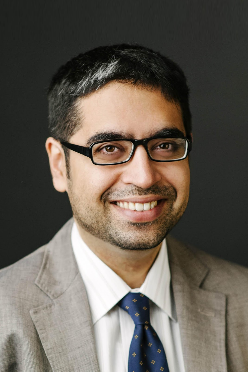
Dr. Saif A. Khan obtained a Bachelor's degree in Chemical Engineering at the University Department of Chemical Technology (UDCT), Mumbai where he was the university gold medallist. He received his Ph.D. in Chemical Engineering from the Massachusetts Institute of Technology in 2006, where he was a Presidential Fellow. In 2006, he joined the National University of Singapore (NUS), where he is currently an Associate Professor of Chemical and Biomolecular Engineering.
He is also the Deputy Head of Research and External relations at NUS Chemical and Biomolecular Engineering and Chair of the University-wide General Education Curriculum Committee. His research group at NUS develops new microfluidics-based ‘factories’ for the continuous manufacture of pharmaceuticals and advanced materials in collaboration with several industrial partners worldwide.
In particular, the development of novel, scalable continuous flow reactors and crystalline drug particle generators that bridge the drug substance-drug product interface have been foci of much interest in his programme. He has also co-founded two start-up companies focused on advanced materials manufacture and ophthalmic drug delivery.
Dr. Saif A. Khan obtained a Bachelor's degree in Chemical Engineering at the University Department of Chemical Technology (UDCT), Mumbai where he was the university gold medallist. He received his Ph.D. in Chemical Engineering from the Massachusetts Institute of Technology in 2006, where he was a Presidential Fellow. In 2006, he joined the National University of Singapore (NUS), where he is currently an Associate Professor of Chemical and Biomolecular Engineering.
He is also the Deputy Head of Research and External relations at NUS Chemical and Biomolecular Engineering and Chair of the University-wide General Education Curriculum Committee. His research group at NUS develops new microfluidics-based ‘factories’ for the continuous manufacture of pharmaceuticals and advanced materials in collaboration with several industrial partners worldwide.
In particular, the development of novel, scalable continuous flow reactors and crystalline drug particle generators that bridge the drug substance-drug product interface have been foci of much interest in his programme. He has also co-founded two start-up companies focused on advanced materials manufacture and ophthalmic drug delivery.
Prof. Lu Wei specialises in designing mathematical models and efficient machine learning algorithms for solving fundamental data processing problems, with a specific focus on Natural Language Processing (NLP). Some of his research areas include natural language semantics and fundamental problems related to structured prediction. Prior to joining Singapore University of Technology and Design (SUTD), Prof. Lu Wei worked as a postdoctoral research associate at the University of Illinois at Urbana-Champaign and was a PhD student at the Singapore-MIT Alliance of the National University of Singapore, Prof. Lu Wei received his Bachelor’s degree (1st class) from the School of Computing, National University of Singapore. Prof. Lu Wei is currently an Associate Professor at the Information Systems Technology and Design.
One of Prof. Lu Wei’s research areas is to create a systematic, unified view of the NLP algorithms that have been developed. NLP is a branch of artificial intelligence that deals with Human-Computer Interaction using the natural language. NLP aims to understand human languages in a manner that is valuable. Prof. Lu believes in a unified framework to understand the connections between many classic NLP models, and enable researchers to build new models based on them once they have mastered them. Prof. Lu’s team has partnered industry players such as Alibaba, Boeing and ByteDance to build new models using the unified framework.
In a field now largely dominated by empirical deep learning approaches, Prof. Lu strongly believes that it is important to understand the fundamental mathematical principles behind the various models proposed for NLP. “I hope the framework is one useful step towards what I would like to achieve”, he said.
Prof. Lu Wei specialises in designing mathematical models and efficient machine learning algorithms for solving fundamental data processing problems, with a specific focus on Natural Language Processing (NLP). Some of his research areas include natural language semantics and fundamental problems related to structured prediction. Prior to joining Singapore University of Technology and Design (SUTD), Prof. Lu Wei worked as a postdoctoral research associate at the University of Illinois at Urbana-Champaign and was a PhD student at the Singapore-MIT Alliance of the National University of Singapore, Prof. Lu Wei received his Bachelor’s degree (1st class) from the School of Computing, National University of Singapore. Prof. Lu Wei is currently an Associate Professor at the Information Systems Technology and Design.
One of Prof. Lu Wei’s research areas is to create a systematic, unified view of the NLP algorithms that have been developed. NLP is a branch of artificial intelligence that deals with Human-Computer Interaction using the natural language. NLP aims to understand human languages in a manner that is valuable. Prof. Lu believes in a unified framework to understand the connections between many classic NLP models, and enable researchers to build new models based on them once they have mastered them. Prof. Lu’s team has partnered industry players such as Alibaba, Boeing and ByteDance to build new models using the unified framework.
In a field now largely dominated by empirical deep learning approaches, Prof. Lu strongly believes that it is important to understand the fundamental mathematical principles behind the various models proposed for NLP. “I hope the framework is one useful step towards what I would like to achieve”, he said.
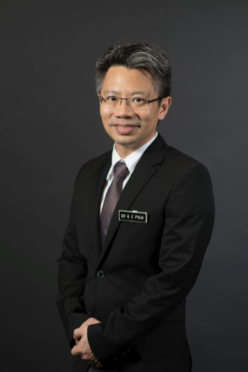
Dr. Phua Ghee Chee graduated from the National University of Singapore (NUS) with a Bachelors of Medicine and Surgery degree in 1997, and completed his postgraduate studies at the Singapore General Hospital as well as at Duke University Medical Centre in 2002. He currently serves as the head of the Department of Respiratory and Critical Care Medicine at the Singapore General Hospital. A keen educator, Dr. Phua also holds the post of Director of Postgraduate Education in the SingHealth-Duke Medicine Academic Clinical Programme and is a Clinical Associate Professor at Duke-NUS Medical School.
Dr. Phua has spearheaded research in the fields of Respiratory Medicine, Intensive Care Medicine and Internal Medicine since 2007. His most recent paper ,“Preparing your intensive care unit for the COVID-19 pandemic: practical considerations and strategies”, provides valuable insights for healthcare professionals who are fighting to save the lives of critically ill COVID patients in ICU wards.
Dr. Phua strongly believes in adopting a two pronged approach to medicine. He not only offers patients the best care by researching new treatment methods, but also ensures that the mental wellness of healthcare colleagues is given ample attention. His publications display extensive research into the causes of burn-out of doctors and offer insights into possible areas of improvement in the Singhealth Residency Program.
Dr. Phua has received numerous awards celebrating his contributions to the medical field, including the Excellent Service Award (Gold) in 2010, the Singhealth Distinguished Young Leader Award in 2013, the Dean’s Special Recognition Award in 2017, the Singapore Health Quality Service Gold Award in 2019 and the 20 years Long Service Award, also in 2019.
Dr. Phua Ghee Chee graduated from the National University of Singapore (NUS) with a Bachelors of Medicine and Surgery degree in 1997 and completed his postgraduate studies at the Singapore General Hospital as well as at Duke University Medical Centre in 2002. He currently serves as the head of the Department of Respiratory and Critical Care Medicine at the Singapore General Hospital. A keen educator and researcher, Dr. Phua also holds the post of Director of Postgraduate Education in the SingHealth-Duke Medicine Academic Clinical Programme and is a Clinical Associate Professor at Duke-NUS Medical School.
Dr. Phua has spearheaded research in the fields of Respiratory Medicine, Intensive Care Medicine and Internal Medicine since 2007. His most recent paper ,“Preparing your intensive care unit for the COVID-19 pandemic: practical considerations and strategies”, provides valuable insights to healthcare professionals who are fighting to save the lives of critically ill COVID patients in ICU wards.
Dr. Phua strongly believes in adopting a two pronged approach to medicine. He not only offers patients the best care by researching new treatment methods, but also ensures that the mental wellness of healthcare colleagues is given ample attention. His publications display extensive research into the causes of burn-out rates of doctors and offer insights into possible areas of improvement in the Singaporean Residency Program.
Dr. Phua has received numerous awards celebrating his contributions to the medical field, including the Excellent Service Award (Gold) in 2010, the Singhealth Distinguished Young Leader Award in 2013, the Dean’s Special Recognition Award in 2017, the Singapore Health Quality Service Gold Award in 2019 and the 20 years Long Service Award, also in 2019.
Dr. Tan Meng How is currently an Assistant Professor in the School of Chemical and Biomedical Engineering at Nanyang Technological University (NTU). Prior to these appointments, he studied Mechanical Engineering and Economics at the University of California – Berkeley from 1998 to 2001 as well as Aeronautics at California Institute of Technology (Caltech) from 2001 to 2002 on a Singapore Government Overseas Merit Scholarship. He was also awarded the Donald Wills Douglas Fellowship at Caltech. Subsequently, he embarked on his doctoral studies from 2004 to 2009 at Stanford University, where he received his Ph.D. in Developmental Biology.
Dr. Tan Meng How’s overall research interests are in systems biology and genomics. He leverages on cutting edge technologies, high throughput approaches, and engineering principles to investigate regulatory networks in biology. He is the principal investigator at DNA and RNA Editing (DaRE) Lab, particularly in the context of cell identity. The research activities in his laboratory are broadly classified into DNA editing, involving the development of novel genome engineering technologies and the application of these technologies to understand cell fate decisions and RNA editing, involving the functions of RNA editing events and regulation of adenosine-to-inosine (A-to-I) editing.
He has published corresponding-author papers in top-tier journals, including Nature and Nature Chemical Biology and has received several awards for his research, including the Outstanding Young Principal Investigator Award (AIChE-SLS) and the EMBO Global Investigator Award. Furthermore, the NTU iGEM team led by Dr. Tan Meng How has been awarded a Gold medal for the research on CRISPR-Cas.
Dr. Tan Meng How is currently an Assistant Professor in the School of Chemical and Biomedical Engineering at Nanyang Technological University (NTU). Prior to these appointments, he studied Mechanical Engineering and Economics at the University of California – Berkeley from 1998 to 2001 as well as Aeronautics at California Institute of Technology (Caltech) from 2001 to 2002 on a Singapore Government Overseas Merit Scholarship. He was also awarded the Donald Wills Douglas Fellowship at Caltech. Subsequently, he embarked on his doctoral studies from 2004 to 2009 at Stanford University, where he received his Ph.D. in Developmental Biology.
Dr. Tan Meng How’s overall research interests are in systems biology and genomics. He leverages on cutting edge technologies, high throughput approaches, and engineering principles to investigate regulatory networks in biology. He is the principal investigator at DNA and RNA Editing (DaRE) Lab, particularly in the context of cell identity. The research activities in his laboratory are broadly classified into DNA editing, involving the development of novel genome engineering technologies and the application of these technologies to understand cell fate decisions and RNA editing, involving the functions of RNA editing events and regulation of adenosine-to-inosine (A-to-I) editing.
He has published corresponding-author papers in top-tier journals, including Nature and Nature Chemical Biology and has received several awards for his research, including the Outstanding Young Principal Investigator Award (AIChE-SLS) and the EMBO Global Investigator Award. Furthermore, the NTU iGEM team led by Dr. Tan Meng How has been awarded a Gold medal for the research on CRISPR-Cas.
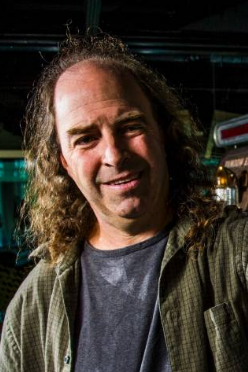
Mr. Patrick Helean is a science communicator and demonstrator. Mr. Helean has had much experience presenting to a wide range of audiences – from professors, prime ministers, as well as Nobel Laureates. Before joining Questacon – The National Science and Technology Centre located in Canberra, Mr. Helean acted and directed various plays in Australia, such as Camelot, held at the Queanbeyan Bicentennial Function Centre in 2006. Mr. Helean is currently the Excited Particles Coordinator for Special Events and Training at Questacon, and actively presents science shows and demonstrations that engage and inspire people.
At Questacon, Mr. Helean aims to promote greater understanding and awareness of science and technology within the community, while making that experience fun, interactive and relevant. Questacon is recognised internationally as one of the world's leading interactive science centres and welcomes over 500 000 visitors each year to its facilities.
Mr. Helean believes deeply in science education, as science is a universal language to answer the questions about the universe. He therefore strives to give his audience an understanding and appreciation of science, aiming not to be only a science educator, but rather an inspirer for others to pursue science education.
Mr. Patrick Helean is a science communicator and demonstrator. Mr. Helean has had much experience presenting to a wide range of audiences – from professors, prime ministers, as well as Nobel Laureates. Before joining Questacon – The National Science and Technology Centre located in Canberra, Mr. Helean acted and directed various plays in Australia, such as Camelot, held at the Queanbeyan Bicentennial Function Centre in 2006. Mr. Helean is currently the Excited Particles Coordinator for Special Events and Training at Questacon, and actively presents science shows and demonstrations that engage and inspire people.
At Questacon, Mr. Helean aims to promote greater understanding and awareness of science and technology within the community, while making that experience fun, interactive and relevant. Questacon is recognised internationally as one of the world's leading interactive science centres and welcomes over 500 000 visitors each year to its facilities.
Mr. Helean believes deeply in science education, as science is a universal language to answer the questions about the universe. He therefore strives to give his audience an understanding and appreciation of science, aiming not to be only a science educator, but rather an inspirer for others to pursue science education.
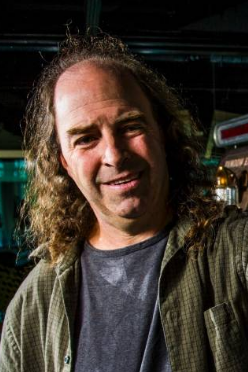
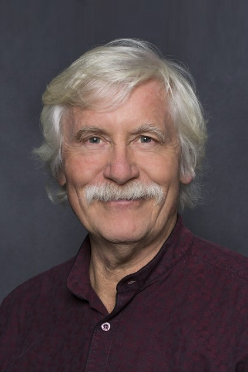
Prof. Hans Bachor is Emeritus Professor at the Australian National University and independent consultant in the area of physics, science communication and science education. He works from his base near Canberra, Australia and is engaged in national and international activities. Until 2011 he was the Director of the Australian Research Council Centre of Excellence for Quantum-Atom Optics (ACQAO), a national centre to study atoms and light at the quantum level and to explore options for future quantum technologies. He was an ARC Federation Fellow 2003-2008.
His focus is now open science communication: Presently he is Secretary for Education and Public Awareness of Science at the Australian Academy of Science and simultaneously Mind in Residence at Questacon in Canberra. He has a keen interest in Professional Teachers training in STEM and the creation of trusted science information of high quality and engaging for many age and cultural groups.
Hans Bachor received his diploma and doctorate in Physics from the University of Hannover, Germany. He was attracted to Australia in 1981 by the Australian National University (ANU) where he has been teaching Physics at all levels with great enthusiasm and success. He held the position of Professor at ANU since 1995 and Emeritus Professor since 2011.
He established experimental quantum optics in Australia and created a widely known group for optics and laser physics and explores the possibilities of harnessing the quantum nature of light. He has pioneered techniques for sensitive measurements beyond the quantum noise limit, for the improvement of optical sensors, interferometers, optical communication and secure communication and the spatial quantum properties of laser beams. These are all part of the new emerging quantum technologies that will touch everybody.
Prof. Hans Bachor is Emeritus Professor at the Australian National University and independent consultant in the area of physics, science communication and science education. He works from his base near Canberra, Australia and is engaged in national and international activities. Until 2011 he was the Director of the Australian Research Council Centre of Excellence for Quantum-Atom Optics (ACQAO), a national centre to study atoms and light at the quantum level and to explore options for future quantum technologies. He was an ARC Federation Fellow 2003-2008.
His focus is now open science communication: Presently he is Secretary for Education and Public Awareness of Science at the Australian Academy of Science and simultaneously Mind in Residence at Questacon in Canberra. He has a keen interest in Professional Teachers training in STEM and the creation of trusted science information of high quality and engaging for many age and cultural groups.
Hans Bachor received his diploma and doctorate in Physics from the University of Hannover, Germany. He was attracted to Australia in 1981 by the Australian National University (ANU) where he has been teaching Physics at all levels with great enthusiasm and success. He held the position of Professor at ANU since 1995 and Emeritus Professor since 2011.
He established experimental quantum optics in Australia and created a widely known group for optics and laser physics and explores the possibilities of harnessing the quantum nature of light. He has pioneered techniques for sensitive measurements beyond the quantum noise limit, for the improvement of optical sensors, interferometers, optical communication and secure communication and the spatial quantum properties of laser beams. These are all part of the new emerging quantum technologies that will touch everybody.
Fax: 6769 5857
This is the ISYF (International Science Youth Forum) 2021 website. Any advice and information found on the pages are solely for the event and educational purposes only. Information related to the speakers are displayed with their consent.
© International Science Youth Forum 2021. All rights reserved.